Holy Saturday Vigil
Holy Saturday Vigil
Holy Saturday Vigil
Welcome
In our day, communities hold vigil when loved ones die in some tragic event. Mourners light candles and offer prayers as a way of processing their grief, honoring the dead, and saying goodbye. But that is not what we have come here to do this evening.
The word “vigil” literally means “wakefulness” and refers to a period of watchful waiting. The earliest Christians held vigil services for spiritual preparation on the eve of significant feast days. The ancient Easter Vigil would begin late on Holy Saturday evening and a liturgy of prayers and scripture readings was observed through the night. Easter morning culminated in baptisms and a meal, bringing a two-day fast to a joyful close.
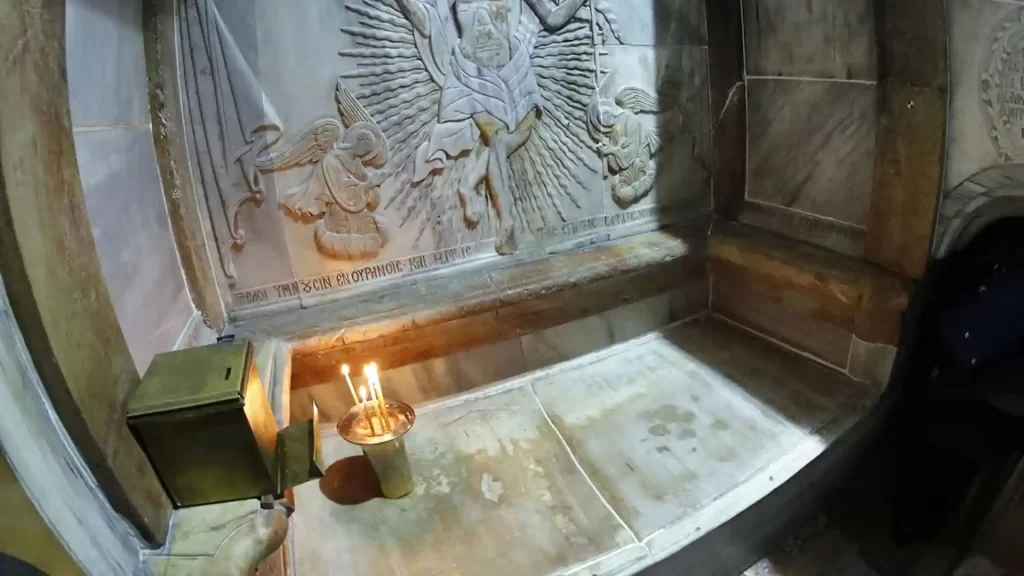
And so it is that Easter begins right here and now, in the pre-dawn hours before Jesus’ resurrection. Though His death is a sobering reality we pause to reflect on, it is, more importantly, the beginning of our celebration, for we have absolute confidence that this grave will be empty in just a few short hours. The whole of our faith depends on it.
“Brothers and sisters, we do not want you to be uninformed about those who sleep in death, so that you do not grieve like the rest of mankind, who have no hope. For we believe that Jesus died and rose again, and so we believe that God will bring with Jesus those who have fallen asleep in him.”
1 Thessalonians 4:13-14
Preparation
 Tonight’s liturgy is entirely self-directed. Read this guide thoughtfully and pause at any word or idea that prompts further reflection.
Welcome the silence and resist the urge to hurry through it.
During times of prayer, take a different posture than your norm. Try kneeling, bowing, or standing; direct your eyes upward, or at the cross on stage; raise or open your hands palms-up in a posture of receptivity.
CALL TO WORSHIP
“Come and see what God has done! He is awesome in his deeds toward the children of man.”
Psalm 66:5
READ
When it was evening, there came a rich man from Arimathea, named Joseph, who also was a disciple of Jesus. He went to Pilate and asked for the body of Jesus. Then Pilate ordered it to be given to him. And Joseph took the body and wrapped it in a clean linen shroud and laid it in his own new tomb, which he had cut in the rock. And he rolled a great stone to the entrance of the tomb and went away. Mary Magdalene and the other Mary were there, sitting opposite the tomb.
The next day, that is, after the day of Preparation, the chief priests and the Pharisees gathered before Pilate and said, “Sir, we remember how that impostor said, while he was still alive, ‘After three days I will rise.’ Therefore order the tomb to be made secure until the third day, lest his disciples go and steal him away and tell the people, ‘He has risen from the dead,’ and the last fraud will be worse than the first.” Pilate said to them, “You have a guard of soldiers. Go, make it as secure as you can.” So they went and made the tomb secure by sealing the stone and setting a guard.
Matthew 27:57-66
Reflect
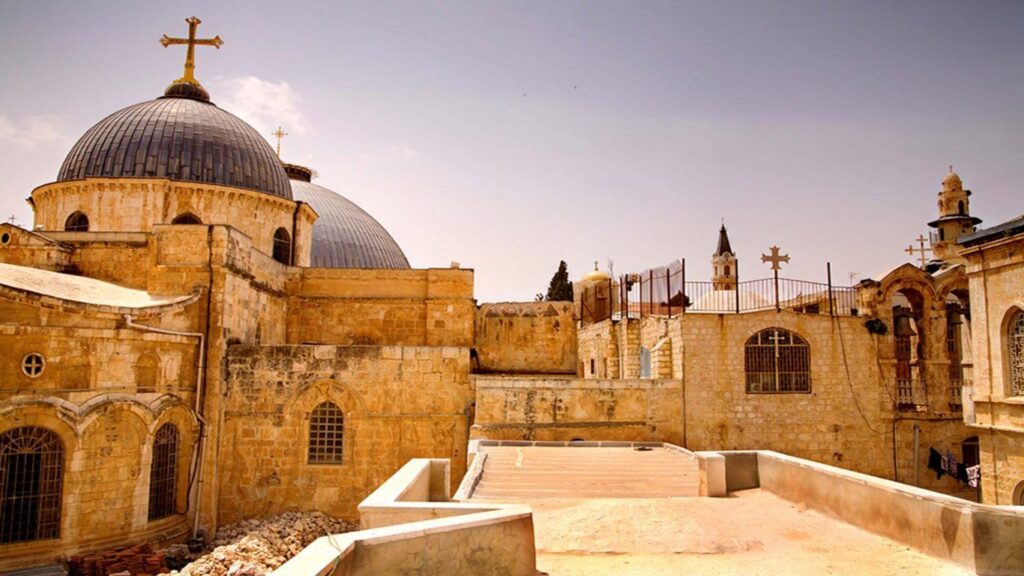
What happened after Jesus died on the cross?
- John 19:34 reports that a soldier thrust his spear into Jesus’ side (likely into His heart) and witnesses observed “blood and water” flowing from the wound. In medical terms, Jesus had suffered a haemothorax (accumulation of blood in the chest cavity), undoubtedly from the savage beating He had endured. When a body has been at rest for a time, the blood separates into two layers: the heavier red blood cells sink while the lighter, watery plasma cells rise. When the spear was withdrawn, the red cells (blood) would have gushed out first, followed by the lighter plasma (water), which was definitive proof of death.
- By Roman law, no less than four professional executioners would have signed Jesus’ death warrant, each verifying that He was deceased.
- Joseph of Arimathea and Nicodemus received permission from Pilate to bury Jesus’ body in Joseph’s tomb.
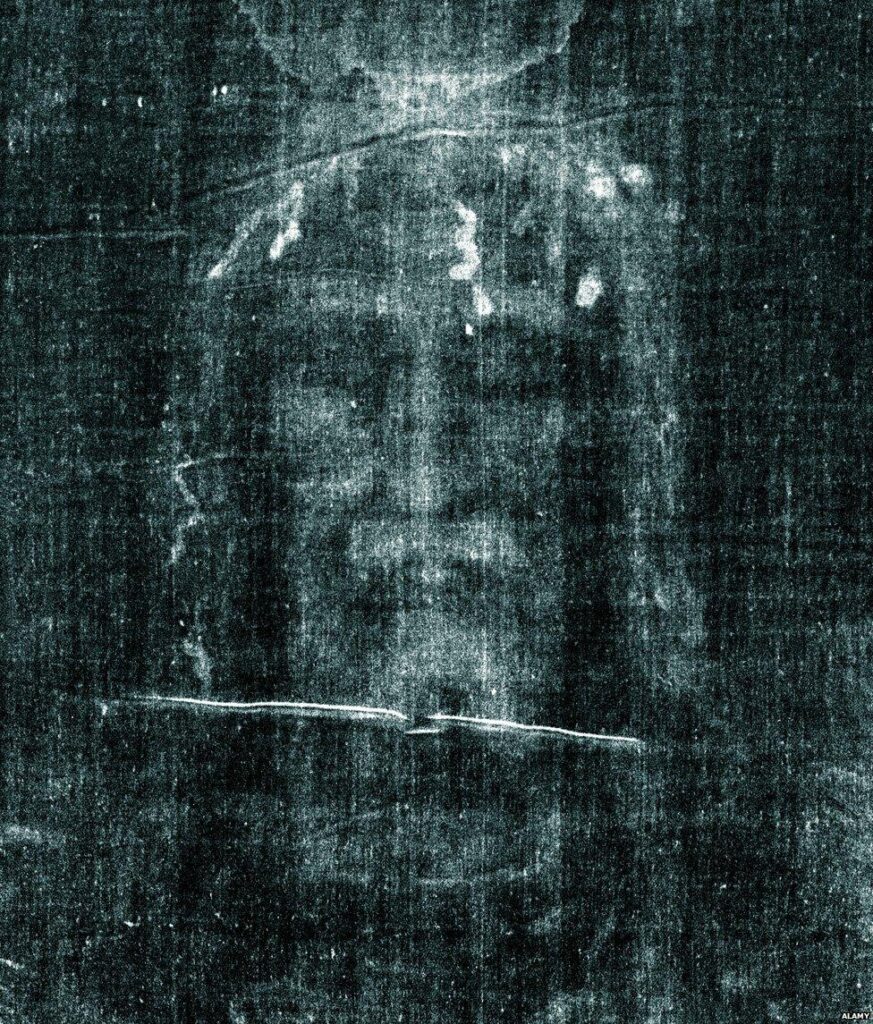
- Following the customary burial procedure, they took Jesus’ naked body from the cross, washed it, laid it on a long linen sheet, more than twice the length of His body, which was folded over His head and tucked under His feet.
- Burial spices were then mixed into a thick, sticky paste for coating the many long strips of linen that were used to mummify Him. This wrapping would have weighed about 100 pounds.
- Finally, the strips of linen were wrapped tightly around every inch of His body, beginning with His feet and working up towards His head.
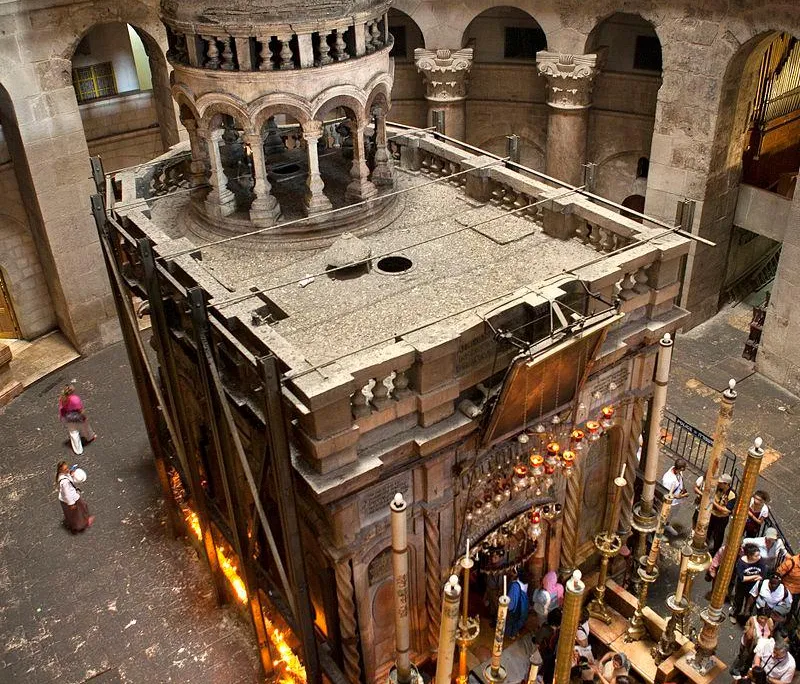
What can 2,000 years of scholarship tell us about Jesus’ tomb?
- The tomb was cut into the bedrock of a hill.
- The doorway was 4 ½ – 5 feet tall.
- The mouth was covered over by a stone that resembled a huge disc, set in a groove in the rock and rolled into a divot.
- Engineers estimate that the stone would have weighed between 3,000 and 4,000 pounds.
- The tomb was guarded by a unit of 4-16 highly trained Roman soldiers.
- Under Roman law, a soldier was not permitted to sit or lean on anything while on duty. If found sleeping on the job, he would be burned alive.
- To prevent tampering with the contents of the tomb, a cord was stretched across the covering stone, fastened by sealing clay to both the stone and the rock face from which the tomb opening was cut, and the official signet of the Roman government was stamped into the clay.
- Anyone who broke the seal would be crucified upside down.
Pause
Begin in silence. Practice box breathing: inhale for four seconds, hold for four, exhale for four, pause for four, and repeat. Let the stillness settle you. Center your attention on this evening’s purpose, and be fully present here, at the tomb.
Read prayerfully, asking the Holy Spirit to cause a particular word, phrase, or idea to jump out at you.
READ
Who has believed what he has heard from us?
And to whom has the arm of the Lord been revealed?
For he grew up before him like a young plant,
and like a root out of dry ground;
he had no form or majesty that we should look at him,
and no beauty that we should desire him.
He was despised and rejected by men,
a man of sorrows and acquainted with grief;
and as one from whom men hide their faces
he was despised, and we esteemed him not.
Surely he has borne our griefs
and carried our sorrows;
yet we esteemed him stricken,
smitten by God, and afflicted.
But he was pierced for our transgressions;
he was crushed for our iniquities;
upon him was the chastisement that brought us peace,
and with his wounds we are healed.
All we like sheep have gone astray;
we have turned—every one—to his own way;
and the Lord has laid on him
the iniquity of us all.
He was oppressed, and he was afflicted,
yet he opened not his mouth;
like a lamb that is led to the slaughter,
and like a sheep that before its shearers is silent,
so he opened not his mouth.
By oppression and judgment he was taken away;
and as for his generation, who considered
that he was cut off out of the land of the living,
stricken for the transgression of my people?
And they made his grave with the wicked
and with a rich man in his death,
although he had done no violence,
and there was no deceit in his mouth.
Yet it was the will of the Lord to crush him;
he has put him to grief;
when his soul makes an offering for guilt,
he shall see his offspring; he shall prolong his days;
the will of the Lord shall prosper in his hand.
Out of the anguish of his soul he shall see and be satisfied;
by his knowledge shall the righteous one, my servant,
make many to be accounted righteous,
and he shall bear their iniquities.
Therefore I will divide him a portion with the many,
and he shall divide the spoil with the strong,
because he poured out his soul to death
and was numbered with the transgressors;
yet he bore the sin of many,
and makes intercession for the transgressors.
Isaiah 53
Reflect
on what you have just read.
What jumped out at you? Was any word or idea particularly striking? Take a prayerful moment to talk with God about what He might be trying to tell you. If you need a little help, use the prompts below:
How does the description of the Messiah in Isaiah 53 make you feel about Jesus? Yourself? Your past? Your future?
What transgressions and iniquities do you feel led to confess to Him in this moment?
Verse 5 indicates that Jesus’ chastisement (rebuke) and wounding have afforded you peace and healing. Do you currently walk in a sense of peace and healing? Why or why not?
750 years after Isaiah wrote those prophetic words, Jesus came and fulfilled every one.
In fact, He fulfilled more than 350 prophecies and He is the fulfillment and perfection of every biblical type: the new and better Adam, firstborn from the dead (Col. 1:18); the true Noah, carrying His people through judgment (1 Pet. 3:18–22); the greater Abraham, blessing the nations through His offspring by faith (Gal. 3:29); the true Isaac, the Son of sacrifice (Heb. 11:17–19); the better Jacob, who through suffering brings forth a new people of faith (Lk. 22:28-30); the greater Moses, deliverer and mediator of a new covenant (Heb. 3); and the true Joshua (Yeshua; Jesus), who leads His people into the eternal land of promise.
And that’s just a few of the heroes! He is also the new and better Bread of Life, Living Water, Door, and Lamb of sacrifice, whose blood covers us.
GIVE THANKS
Spend some time in prayer, giving thanks to God for all that He has done for you!
READ
Since therefore Christ suffered in the flesh, arm yourselves with the same way of thinking, for whoever has suffered in the flesh has ceased from sin, so as to live for the rest of the time in the flesh no longer for human passions but for the will of God. For the time that is past suffices for doing what the Gentiles want to do, living in sensuality, passions, drunkenness, orgies, drinking parties, and lawless idolatry. With respect to this they are surprised when you do not join them in the same flood of debauchery, and they malign you; but they will give account to him who is ready to judge the living and the dead. For this is why the gospel was preached even to those who are dead, that though judged in the flesh the way people are, they might live in the spirit the way God does.
The end of all things is at hand; therefore be self-controlled and sober-minded for the sake of your prayers. Above all, keep loving one another earnestly, since love covers a multitude of sins.
1 Peter 4:1-8
Kneel + Confess
First, ask God to sift through the affections of your heart and call to mind the ways you live for “human passions” rather than for “the will of God.”
Second, confess these things to Him, and repent, as to a loving, gracious Father who longs to forgive you and offers a life far greater than you can imagine.
Third, listen for His voice. Having confessed your sins, what does your Father now say to you?
Fourth, pray for the needs of your family and loved ones; for awakening in Rio Vista Church; for the Spirit to be palpably near to all the churches in our region this Easter; for all the lost in our city to come to know Him!
Finally, close your time of prayer with the assurance of grace offered in the words of Psalm 130:
“Hear my cry, O Lord. Pay attention to my prayer. LORD, if you kept a record of our sins, who, O Lord, could ever survive? But you offer forgiveness, that we might learn to fear you. I am counting on the LORD; yes, I am counting on him. I have put my hope in his word. I long for the Lord more than sentries long for the dawn, yes, more than sentries long for the dawn.”
Psalm 130:1-6